The first two weeks of school have their own kind of chaos… sixteen kids asking where the pencil sharpener lives, two parents emailing about allergies before the bell rings, a stack of paperwork you swore you’d already filed.
You know the feeling. It’s not the tidy version from the commercials. It’s loud, a little frantic, and more often than not you’re building your classroom management on the fly because summer ran out before the room was ready.
Second year teaching, I had a student stand by the cubby wall for a good ten minutes on the very first morning, close to tears, because nobody had told her which hook belonged to her. Nothing dramatic. She just didn’t know, and I hadn’t thought to say. That was the year I started labeling everything before a single kid walked through the door, and I haven’t stopped since.
Here’s what fixes that, and fast: charts. Real ones, hanging on real walls. A good chart tells a six-year-old where to line up without you repeating yourself for the fortieth time. It tells the room whose turn it is to feed the fish.
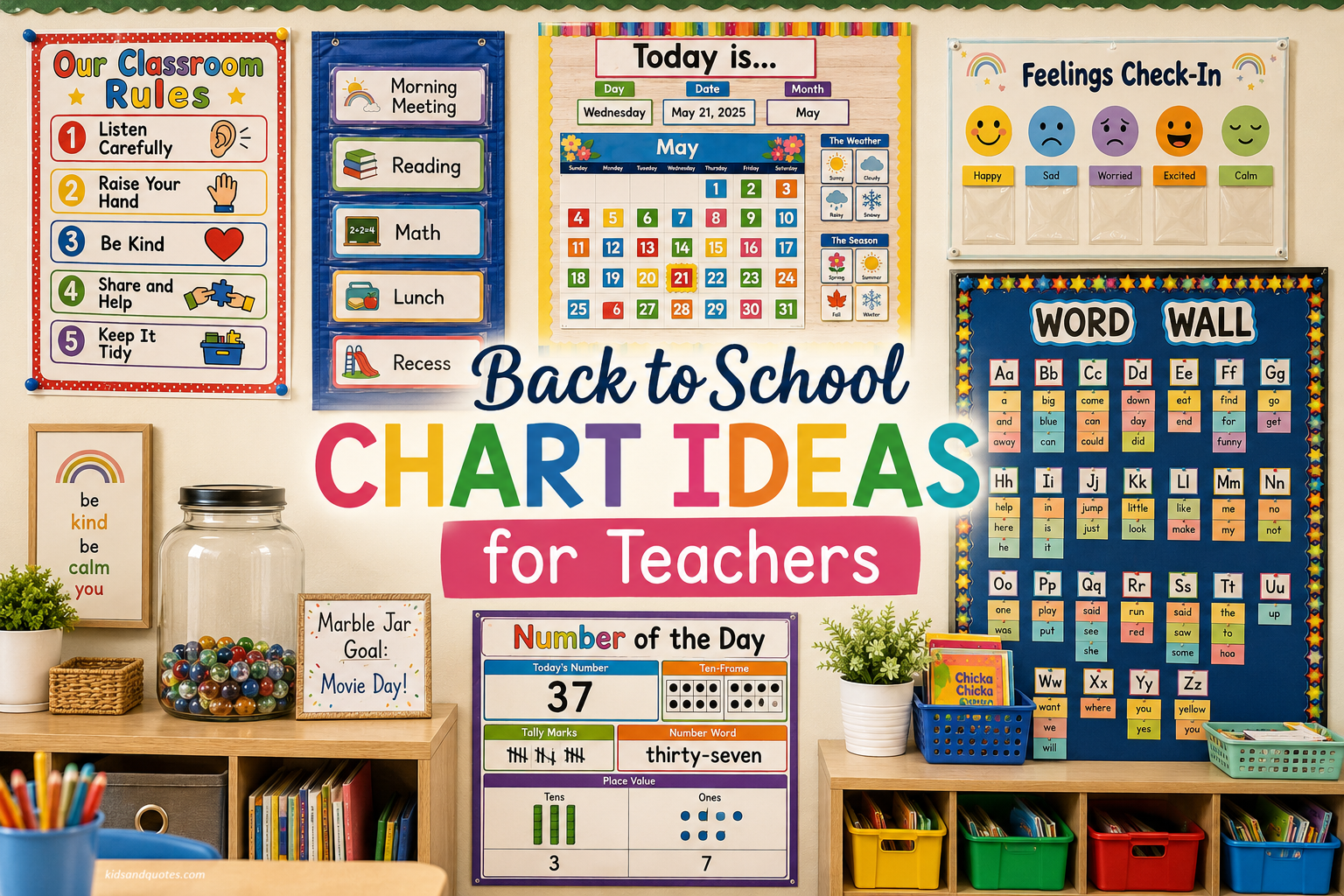
So that’s what’s below… 18 back to school chart ideas for teachers, the kind elementary teachers actually reach for: classroom management, daily routines, the classroom charts that make a room feel like yours by day three.
Some you’ll print. Some you’ll throw together with a marker and leftover cardstock the night before open house. No art degree required.
Classroom Rules Chart
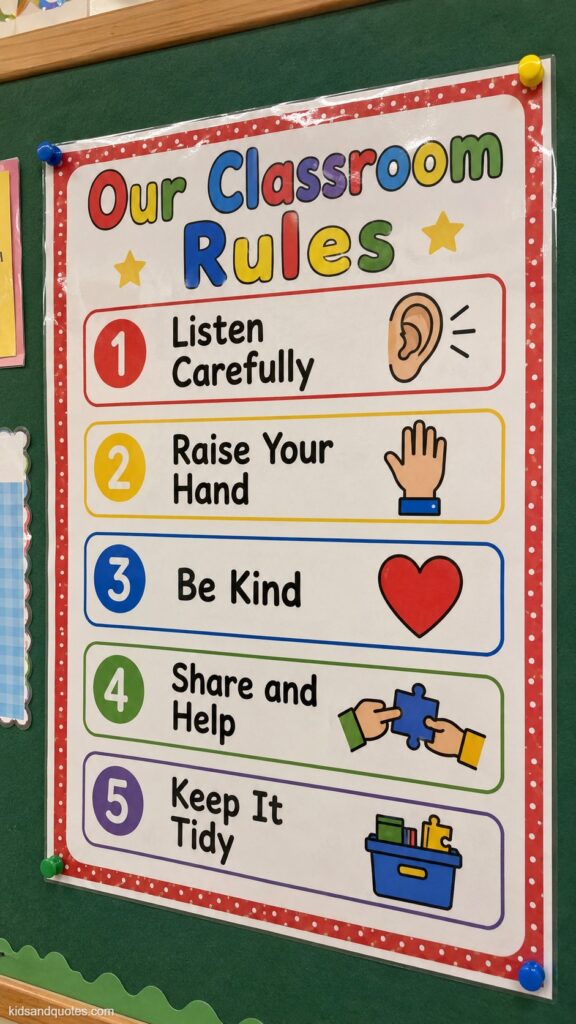
Every classroom needs ground rules, and a classroom rules poster is where you lay them out before day one even gets weird. Keep it to four or five rules max… kids won’t remember twelve, and honestly, neither will you by October. The best ones are worded positively (“Use kind words“) instead of a list of don’ts.
DIY tip
Skip the store-bought version and build it with your class on day one… kids buy in more when they helped write the classroom expectations themselves. If you’d rather print one, go with icon-based rules so pre-readers can “read” it too.
Grade note
Works for any grade, but for K-2, add pictures. Older elementary kids do fine with text alone, covering the basics of first day of school rules without extra fuss.
Classroom Jobs / Helpers Chart
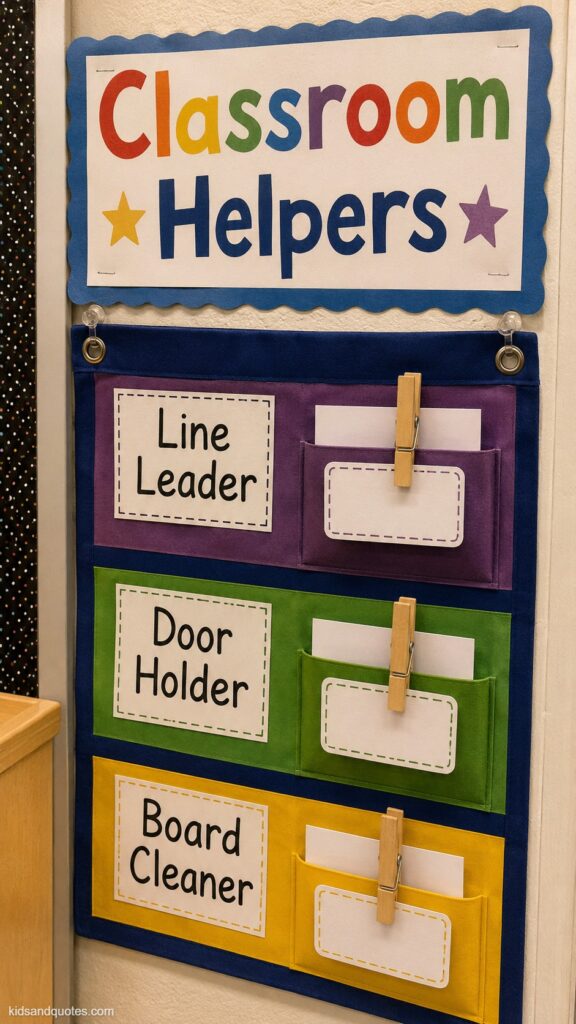
A classroom jobs chart hands out ownership… line leader, paper passer, plant waterer… so the room runs on more than just you. Rotate weekly, and suddenly classroom responsibilities aren’t your job alone anymore.
DIY tip
Library pockets with craft-stick names dropped in each slot work better than laminated name tags… swapping sticks takes ten seconds, no printer involved.
Grade note
Younger classes love a job wheel with pictures; upper elementary kids appreciate slightly “grown-up” titles like Tech Helper or Attendance Monitor, and the student helpers system practically runs itself by October.
Welcome Back Chart / Door Display
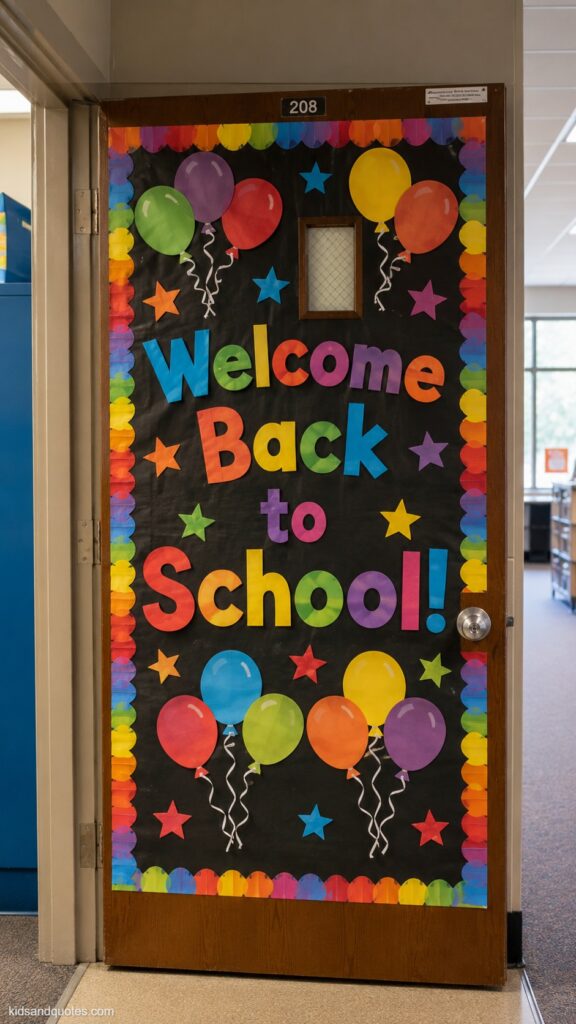
First impressions happen at the door, not the desk. A welcome back to school display… balloons, a name banner, whatever fits your budget… tells kids, and the nervous parents trailing behind them, that somebody was expecting them.
DIY tip
Butcher paper background, a bold “Welcome Back!” cutout, and one paper shape per student with their name on it turns classroom door decor into an instant seating-chart hint too.
Grade note
Little ones remember the door forever, so it’s worth the extra hour. Older grades care less about cute and more about not looking babyish, so keep this first day welcome clean and simple.
Behavior / Clip Chart
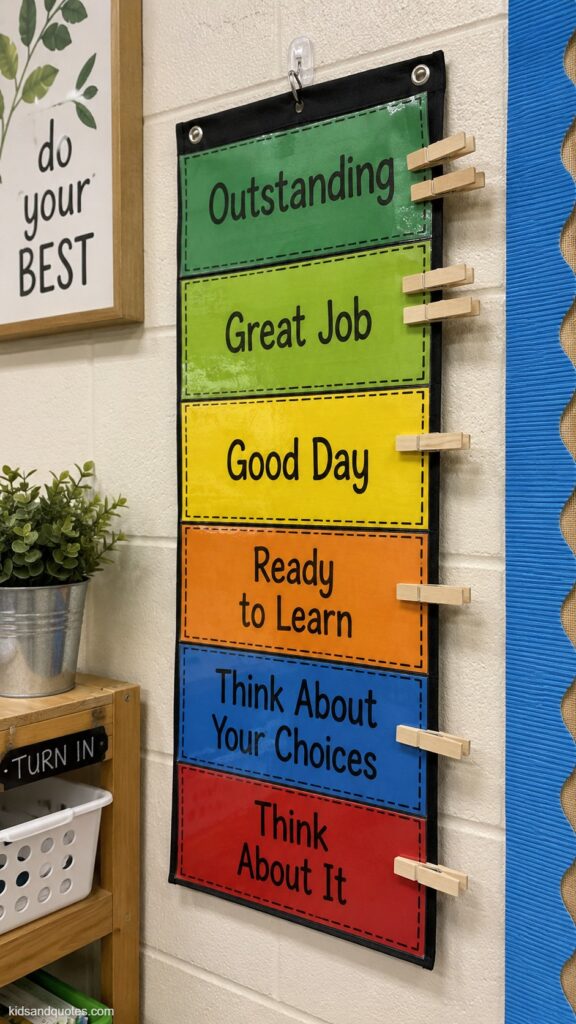
Clip charts are divisive some teachers swear by them, some have sworn them off entirely but as a classroom management tool, a simple clip chart still gives kids a visual read on how their day’s going.
DIY tip
If public clip-moving feels harsh for your group, try a private version, individual clothespin charts kept in a folder instead of on the wall. Same behavior chart ideas, less audience.
Grade note
This one’s really a K-3 tool. By fourth or fifth grade, most kids find it more embarrassing than motivating, so consider swapping to something less visible.
Daily Schedule Chart
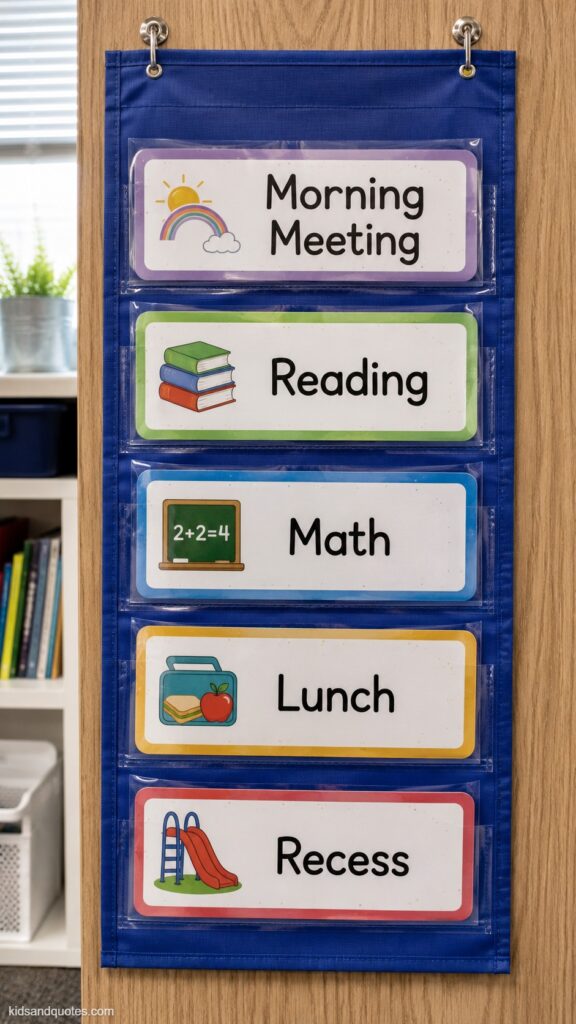
“What do we have next?” gets asked approximately four hundred times a day until you put up a classroom schedule chart. A visual schedule with removable cards means you can shuffle things around on assembly days without repainting your whole system.
DIY tip
Laminate individual subject cards and use velcro dots instead of gluing anything down… schedules change more than you’d think, especially the first month.
Grade note
For younger kids, icons matter more than words. Fifth graders can read a plain daily routine chart just fine, so save yourself the clip art.
Calendar & Days of the Week Chart
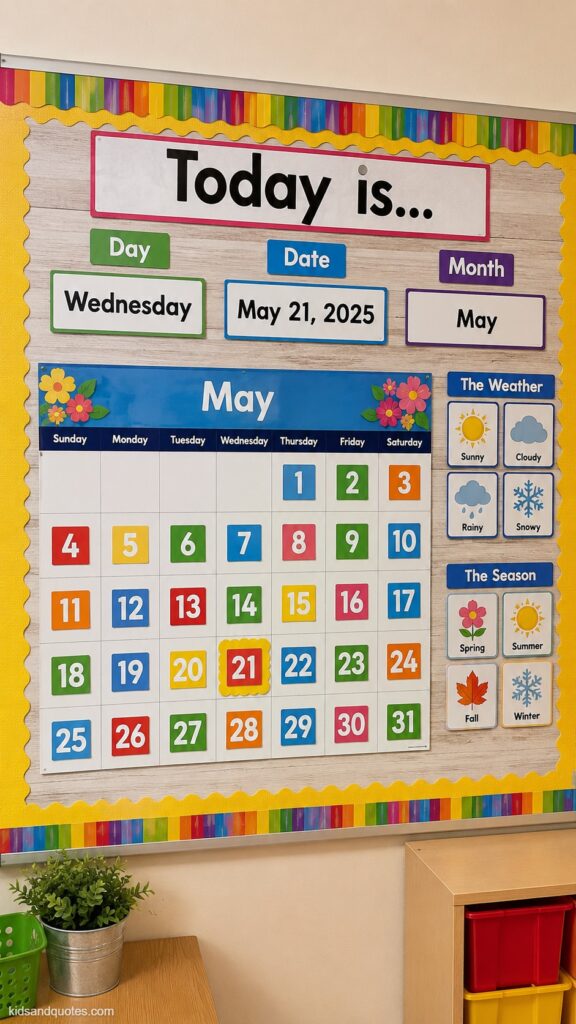
Calendar time is practically sacred in a K-2 classroom… a classroom calendar with movable date pieces builds real math skills disguised as routine. Even upper grades benefit from a simple days of the week chart near the door.
DIY tip
Buy, or make, reusable number cards rather than writing the date fresh every morning. Future-you, half-awake on a Monday, will be grateful.
Grade note
Full calendar time… counting days, tracking the month, discussing seasons… is mostly a primary-grade routine. Older classes just need the date visible somewhere in the room.
Weather Tracking Chart
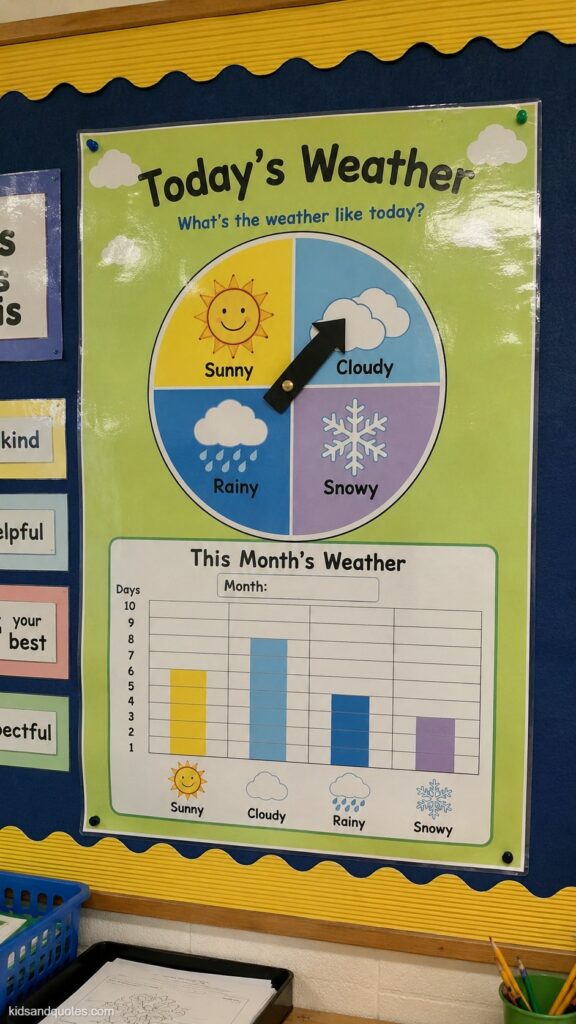
A weather chart for kids turns something they already notice, is it raining again, into a tiny science lesson. Add a spinner or moveable arrow and let a student update it each morning as part of your classroom weather station.
DIY tip
Keep a simple daily weather graph running all month on a side wall. By September’s end, kids can “read” the data themselves and tell you which day had the most rain.
Grade note
Great for K-3 especially; by upper elementary, fold weather into science units instead of keeping it a daily ritual.
Morning Meeting / Greeting Chart
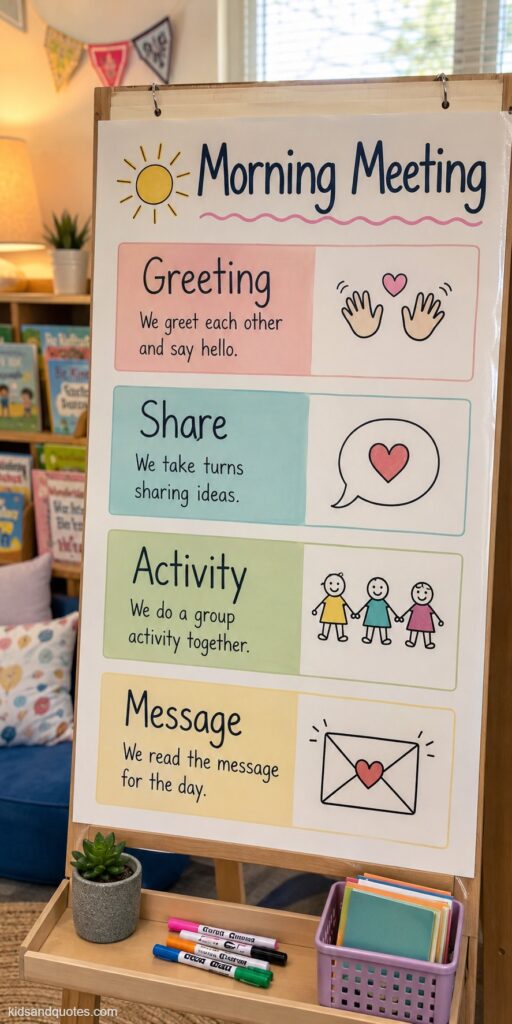
Morning meeting sets the emotional temperature for the whole day, and a simple morning meeting chart keeps the routine consistent even on the mornings you’re running on fumes. Greeting, share, activity, message… same order, every day.
DIY tip
Post the four steps as a permanent poster near your meeting area so kids can lead pieces of the classroom greeting routine themselves once they know it by heart.
Grade note
This SEL morning routine works at every elementary level… older kids just need less hand-holding and more independence running it.
Birthday Chart
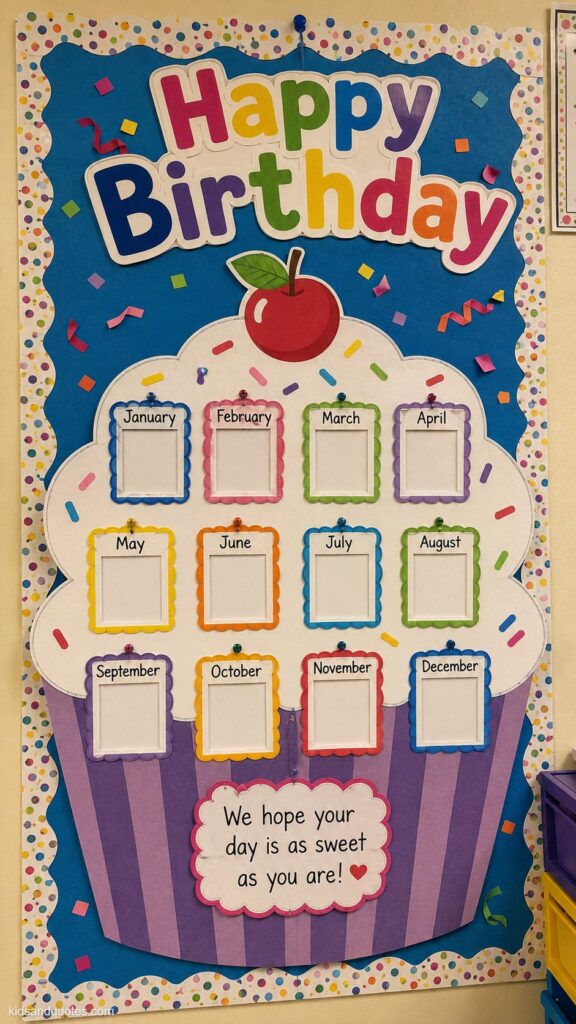
Somebody’s birthday always sneaks up on you mid-lesson, so a classroom birthday chart posted where you can glance at it saves that awkward scramble for a pencil-topper on the wrong day.
DIY tip
A cupcake-shaped birthday board with a candle for each month, names added as you go, is an easy first-week craft project that doubles as decor.
Grade note
Younger students genuinely care about this one, so keep it visible and update it fast. By upper grades, a simple birthday display works just as well… nobody needs a glitter board in fifth grade.
Feelings & Emotions Check-In Chart Photorealistic
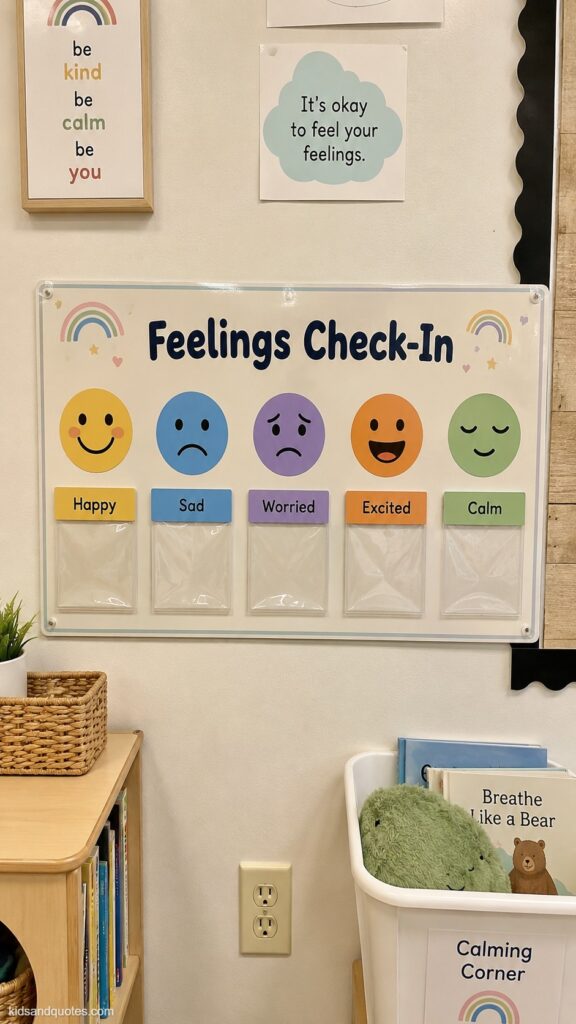
Some mornings a kid walks in and you can just tell something’s off before they say a word. A feelings chart with a quick emotions check-in, clip a name by a face, or slide a card into a pocket, gives quiet kids a way to tell you without talking.
DIY tip
Keep the icons simple, five or six faces max. Too many choices and this SEL classroom tool turns into a decision, not a check-in.
Grade note
Works well through about third grade; older students often prefer a private version, like a sticky note or a quiet word instead.
Growth Mindset Chart Photorealistic
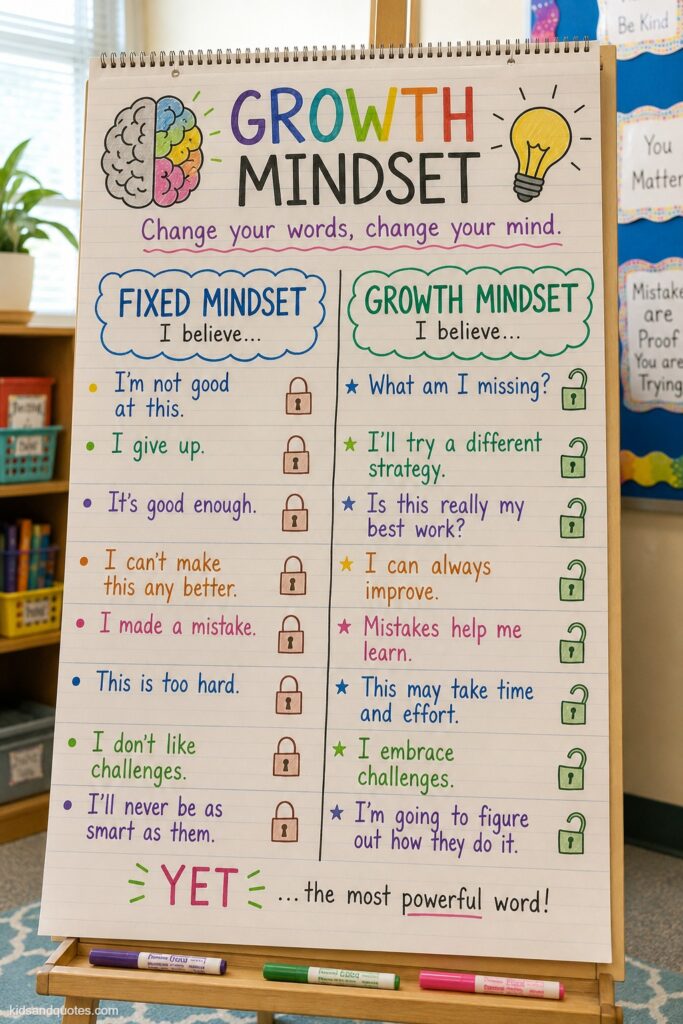
“I can’t do this” versus “I can’t do this yet“… that one word does a lot of heavy lifting, and a growth mindset poster keeps the reminder visible on the hard days. It’s less about pretty phrases and more about giving kids a script when they’re stuck.
DIY tip
A two-column chart, old phrase on one side, growth mindset version on the other, works better than a single motivational quote. Kids can point to it mid-meltdown.
Grade note
This positive self-talk chart lands with any age, honestly, though the wording should get more sophisticated for fourth and fifth grade classrooms.
Classroom Procedures Chart (“What to do when you’re done”)
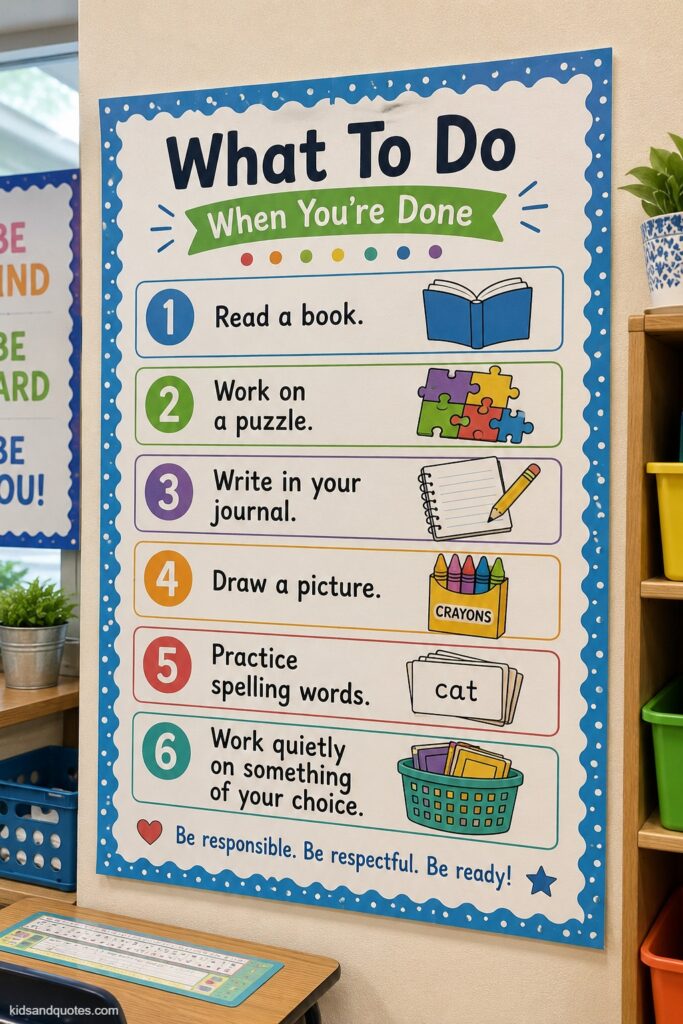
Somebody always finishes first, and without a plan, that kid becomes your biggest distraction. An early finisher chart, read, journal, puzzle, help a neighbor, hands them a choice instead of a reason to wander.
DIY tip
Number the options one through four or five, and let kids self-select rather than assigning tasks. Fewer arguments, more independence, and one less thing added to your daily classroom procedures.
Grade note
Keep the choices concrete for younger grades, a specific bin, a specific book; older kids can handle open-ended options like silent reading without much explanation.
Reading Corner / Library Check-Out Chart
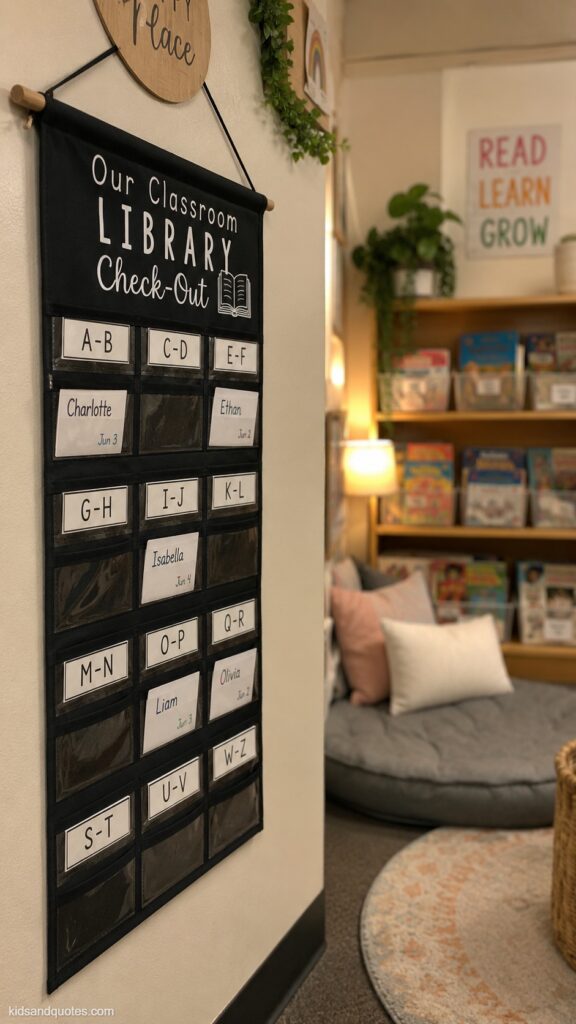
If books are going to actually make it back onto the shelf, you need some kind of book check-out system, even a simple one. A classroom library chart with a pocket per student keeps things honest without turning you into a librarian.
DIY tip
Color-code books by level or genre and match the pockets to the same colors. Reading corner decor doesn’t have to be Pinterest-perfect, it just has to make sense to a seven-year-old.
Grade note
Younger grades need a dead-simple system, one book out at a time; upper elementary can manage a slightly more flexible check-out process.
Hall Pass / Restroom Sign-Out Chart
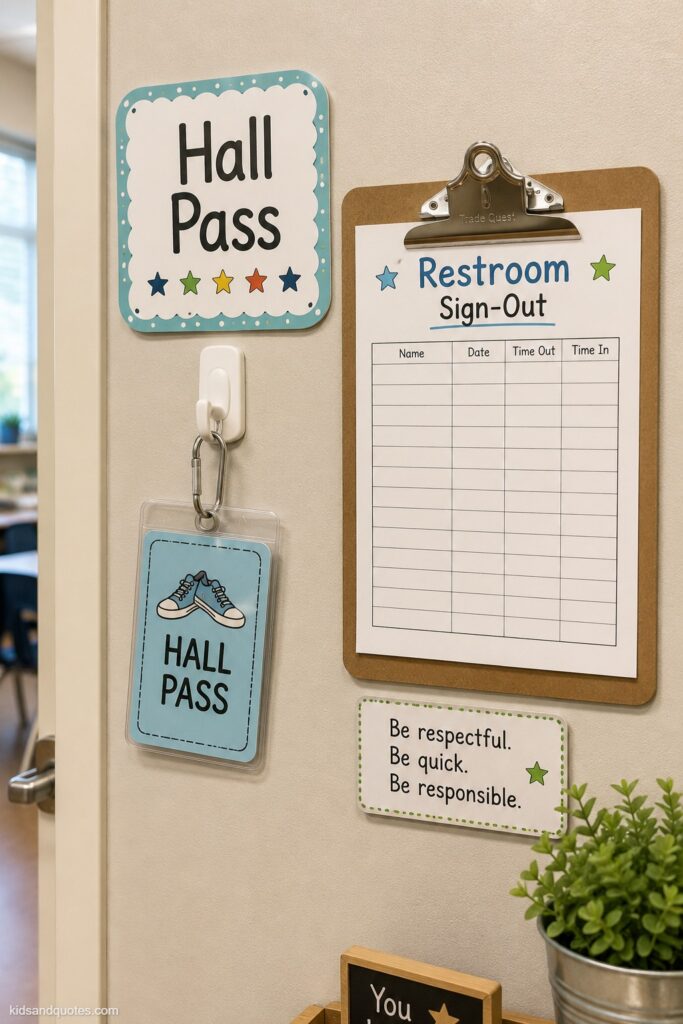
Nobody loves tracking who’s wandering the halls, but a hall pass chart makes it fast instead of a whole production. A clipboard sign-out sheet by the door, or a hanging pass system, keeps it simple and keeps you covered if the office ever asks.
DIY tip
A single physical pass hanging on a hook, only one kid can leave at a time, is often more effective than any restroom sign-out sheet. No pass on the hook means wait your turn.
Grade note
This classroom management system barely needs adjusting by grade, it’s one of the few charts that works exactly the same in kindergarten and fifth grade.
Homework & Assignment Tracker Chart
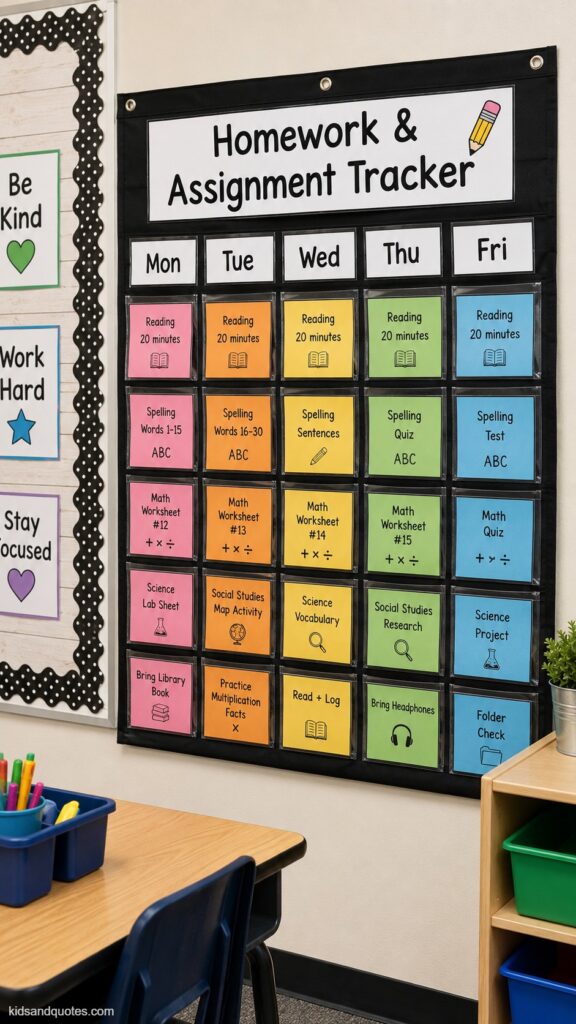
“I turned it in, I swear” gets a lot easier to sort out with a homework chart tracking what’s due and what’s actually landed on your desk. An assignment tracker doesn’t need to be fancy, a simple grid with names down one side and days across the top does the job.
DIY tip
Let kids check off their own names when they turn something in. This classroom accountability chart works better when it’s their responsibility to update, not yours.
Grade note
Mostly a second-grade-and-up tool, kindergarten and early first grade usually don’t have enough independent homework to justify one yet.
Number of the Day Chart
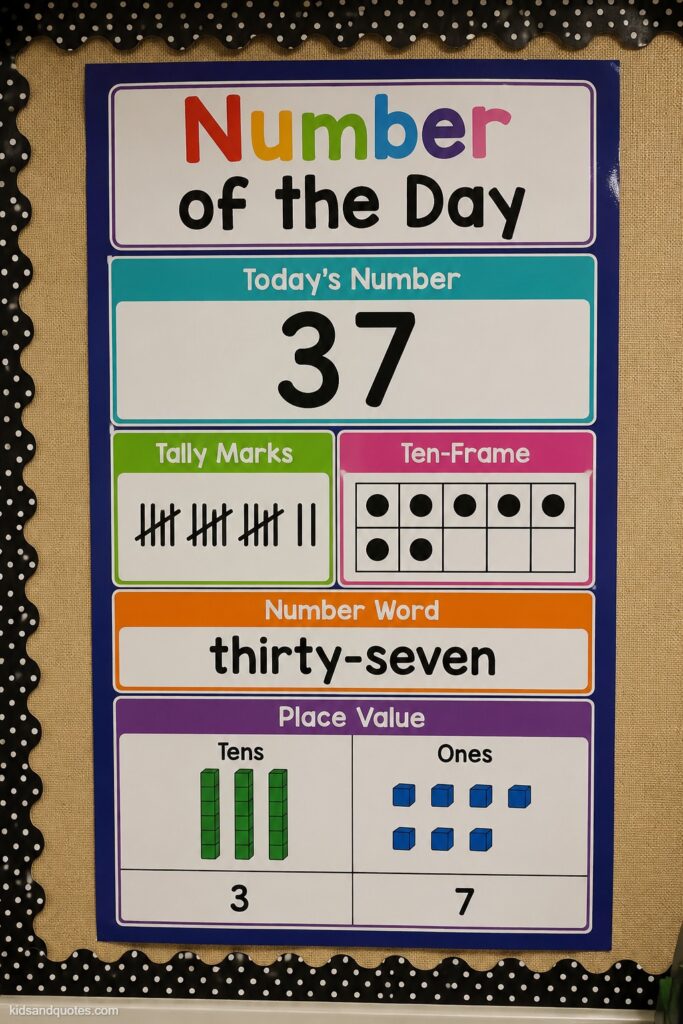
A number of the day routine takes thirty seconds and builds more number sense than a whole worksheet some days, tally marks, a ten-frame, expanded form, all built around one number, every single morning.
DIY tip
Use a laminated math anchor chart with dry-erase sections so you’re not printing a new one daily. Same chart, new number, every morning during calendar time.
Grade note
This number sense routine is built for K-2 mostly; by third grade and up, it usually evolves into more advanced daily math warm-ups instead.
Word Wall / Sight Words Chart
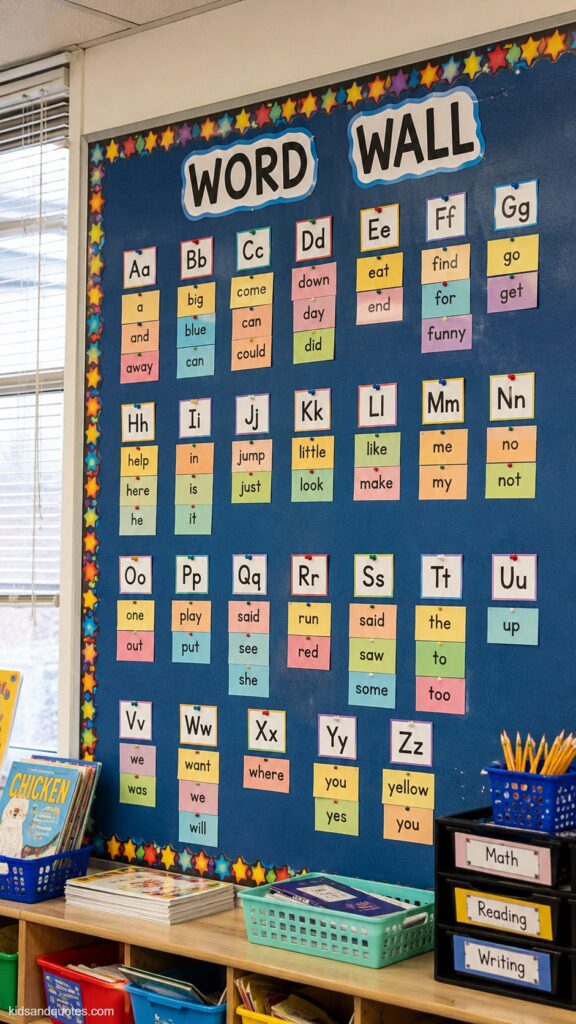
A word wall earns its wall space fast, kids stop asking “how do you spell” quite so often once the answer’s staring back at them from across the room. Organize a sight words chart alphabetically, and update it as new words get introduced.
DIY tip
Add words gradually instead of posting all of them week one. A wall that grows with the year feels a lot less overwhelming than two hundred words dumped on day one.
Grade note
Sight words dominate K-2 word walls; by third grade, this literacy classroom decor often shifts toward vocabulary or spelling pattern walls instead.
Class Reward / Incentive Chart
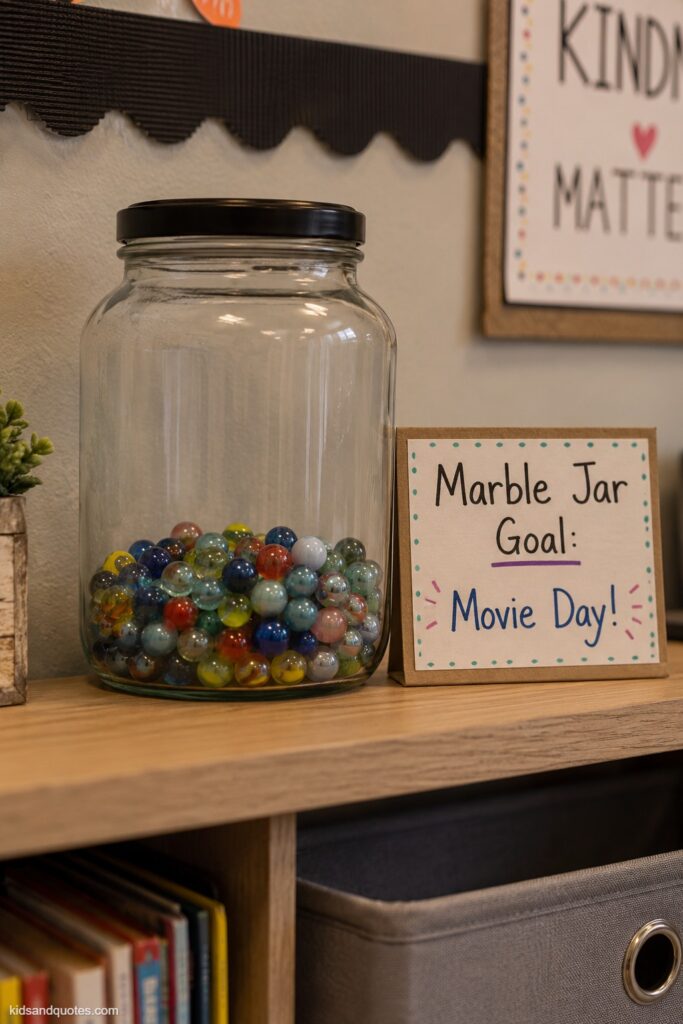
Whole-class motivation is its own beast, and a class reward system, marbles in a jar, tickets in a bucket, whatever you’ve got, gives kids something to work toward together instead of just individually.
DIY tip
A marble jar with a visible goal line, fill to here, earn a movie afternoon, works better than a vague “be good” incentive chart. Specific goals get results; vague ones get forgotten by Thursday.
Grade note
A basic classroom economy or reward jar works at any age, though older kids respond better when they help pick the reward instead of you deciding for them.
Frequently Asked Questions
What charts do I need for the first day of school?
Bare minimum, three: a rules chart, a jobs chart, and some version of a daily schedule. Everything else on this list can wait a week or two. Kids can survive without a weather chart on day one. They cannot survive not knowing where the bathroom pass hangs.
What is an anchor chart used for?
An anchor chart is built with the class, not for them, and it “anchors” a skill or routine so kids have something to point back to later. It’s less about looking nice on the wall and more about being useful three weeks after you made it.
What are the best classroom charts for kindergarten vs. upper elementary?
Kindergarten leans on icons, calendar time, and clip charts. Fifth grade wants the opposite, text over pictures, and please, retire the clip chart before somebody’s ego takes the hit.
Can I make these without buying supplies (DIY vs. printable)?
Cardstock, a marker, and a laminator (or clear contact paper if you’re broke, like most of us) covers half this list. Printables just save you a Sunday night.
Charts Don’t Have to Be Perfect, Just Up
Eighteen charts is a lot to take in over coffee, so here’s the short version: you don’t need all eighteen by Monday. Pick the three or four that solve whatever’s actually loud in your room right now, tape them up, and let the rest wait their turn. A classroom fills in over weeks, not one long weekend with a laminator.
Pin this one so you’ve got it handy when you’re standing in the craft aisle wondering what you actually came in for. And if you’re already deep in back-to-school mode, our back-to-school coloring pages post pairs nicely with this list, same energy, same “get it done before Monday” spirit.
However many of these you end up making, the goal’s the same one it’s always been: less repeating yourself, more kids finding their own way around the room.