Summer always ends the same way, doesn’t it… you swear you’ve got two more weeks, and then suddenly you’re standing in your classroom on a Tuesday with a to-do list that somehow grew overnight. Classroom setup, supply runs, parent emails, that one form nobody explained properly.
It’s not that any single task is hard. It’s that there are forty of them, all due roughly yesterday. I once drove back to the store twice in the same week my first August, both times for bulletin board paper I swore I’d already bought.
That’s exactly the gap this back to school checklist for teachers is built to close. Instead of trying to hold it all in your head, or worse, remembering the one thing you forgot at 11pm the night before open house, you get it broken into categories, so nothing important slips through the cracks between now and the first week of school.
Whether this is your first classroom ever or your fifteenth first day, the list ahead works the same way, mostly elementary-focused, but easy enough to bend toward whatever grade you’re walking into.
And yes, there’s a free printable version waiting at the end, so you can stop scrolling and start checking boxes.
Classroom Setup & Organization Checklist
This is the part of your classroom setup checklist that happens before a single student walks in, and it sets the tone for everything else. Get the furniture and flow right now, and you’ll spend a lot less time rearranging desks mid-October out of sheer frustration.
- Map out furniture arrangement before moving anything heavy… sketch it first, save your back later
- Finalize your seating chart, but pencil it in, not permanent marker
- Walk the room as if you’re a kid: check traffic flow to the door, pencil sharpener, and trash can
- Set up storage systems… bins, carts, totes for anything that isn’t a daily-use item
- Designate a toolbox or caddy for teacher-only supplies, kept out of little hands
- Label everything, shelves, bins, drawers, cubbies, so classroom organization survives past week one
- Leave one open zone unassigned for now… you’ll figure out what it needs by week two
Good storage solutions do more work than people give them credit for. Half of classroom management is just things having an obvious place to go back to.
Classroom Supplies & Materials Checklist
Before you touch a single back to school shopping list, go dig through last year’s leftovers first. Half your classroom supplies list is probably already sitting in a cabinet somewhere, just not where you’d think to look.
- Inventory what’s already in the room… supplies, textbooks, leftover consumables from June
- Make two separate lists: teacher supplies for you, student supplies for the class bins
- Brainstorm what’s actually needed versus what’s just nice to have, budget’s not infinite
- Run a technology check… chargers, headphones, tablets, the projector bulb nobody’s tested since spring
- Stock consumables you’ll burn through fast: pencils, glue, tissues, hand sanitizer
- Set aside a small emergency stash… extra supplies for the kid who shows up with none
- Check expiration dates on anything like markers or paint that dries out over summer
Skip the urge to buy everything new. A little inventory work upfront saves both money and a second trip to the store you didn’t need to make.
Classroom Decor & Bulletin Board Checklist
Classroom decor doesn’t need to be Pinterest-perfect, it just needs to feel warm enough that a nervous seven-year-old relaxes a little on day one. Function first, cute second.
- Put up a welcome display near the door, names on it if you can manage it in time
- Prep your main bulletin board, but leave part of it blank for student work later
- Set up learning centers with clear labels so kids know where to go without asking
- Build out your reading corner, some soft seating, visible books, decent lighting
- Hang a few bulletin board ideas you’ve been saving all summer, but pace yourself, not everything at once
- Leave wall space near desks empty for anchor charts you’ll build with the class
- Double-check nothing decorative is blocking an outlet, vent, or exit path
The room doesn’t have to be finished by day one. It just has to look like someone was expecting them, which, worth saying, is most of what classroom decor is actually for.
Classroom Rules, Procedures & Routines Checklist
Kids don’t actually want chaos, whatever it looks like some days. Clear classroom rules and routines are what let them relax into the year, because they know what’s coming next instead of guessing.
- Draft your core classroom rules, four or five max, worded positively where you can
- Map out daily procedures for the boring stuff: bathroom, pencil sharpening, lining up
- Plan how transitions will actually sound and look, not just what you’ll say once and hope sticks
- Review your emergency evacuation plan and walk the route yourself before day one
- Post fire drill and lockdown procedures where you can glance at them without hunting
- Decide how you’ll handle the first-week reteaching, because routines never stick after just one explanation
- Build in a signal for attention, a clap pattern, a chime, whatever fits your classroom management style
None of this needs to be perfect by Monday. It just needs to exist somewhere besides your head, so the room has something to fall back on when it forgets.
Getting to Know Your Students Checklist
Before you can teach anyone well, you need to actually know who’s in the room, and that starts with paperwork, whether or not it feels like the fun part.
- Read through your class list early, names, pronunciations, anything flagged before day one
- Review student allergies carefully, and know where the plan lives if something happens
- Go through IEP 504 plan details for every student who has one, don’t wait for a reminder email
- Print or make name tags, desks, cubbies, folders, wherever a kid needs to find their spot fast
- Plan a few getting to know you activities for the first days, low-pressure, nothing that puts a shy kid on the spot
- Note any custody, pickup, or family situations you’ll need to handle with extra care
- Start a simple notes system for things you learn in week one that you’ll want to remember in week ten
This part takes longer than people expect. But knowing a kid’s name and story before you need it is worth every minute spent now.
Parent & Family Communication Checklist
Parents are judging the whole year off of one Meet the Teacher night, fair or not, so it’s worth a little extra prep even when your to-do list is already screaming.
- Prep talking points and materials for open house, plus a sign-in sheet so you actually get everyone’s info
- Draft a welcome letter, warm but short, nobody’s reading three paragraphs standing in a hallway
- Print or set up a contact info sheet, best number, best email, preferred language if needed
- Decide your communication plan for the year now, weekly newsletter, app, or something simpler, before habits form the wrong way
- Prepare a few discussion points if a parent corners you with a longer conversation than planned
- Set expectations early for response times, so nobody’s waiting on an email reply that isn’t coming till Sunday
- Have a translated version ready if your class includes non-English-speaking families
Good parent communication mostly just means people know what to expect from you. Set that tone in the first week, and the rest of the year gets noticeably easier.
Administrative & Paperwork Checklist
Nobody went into teaching for the paperwork, and yet here we are. A little administrative prep now saves you from digging through a filing cabinet in a panic come November.
- Set up or update your student files, current info, not whatever’s left from three years ago
- Build a curriculum standards binder, or at least know exactly where the digital version lives
- Put together a sub folder, seating chart, emergency procedures, a few no-prep activities, the works
- Create a class binder system for yourself, whatever mix of digital and paper actually works for your brain
- Confirm any required forms are signed, filed, and not still sitting in a stack somewhere
- Double-check login credentials for gradebooks, attendance systems, and anything else IT will ask about later
- Set a recurring time each week to keep the paperwork from piling back up
None of this is glamorous. But a sub folder built in August is worth more than one built at 6am the morning you actually wake up sick.
Building Relationships with School Staff Checklist
The people who keep a building running rarely get thanked enough, and they’re exactly who you’ll need on a rough Tuesday in October. Building relationships with school staff early pays off all year long.
- Introduce yourself to the front office staff, they field more of your problems than you’d think
- Say hello to the custodians, and mean it, they know things about this building nobody else does
- Check in with the school nurse about any students on your list needing extra attention
- Meet the counselor, and ask how they prefer to be looped in on concerns
- Connect with your grade-level team early, even just a quick coffee or a shared planning hour
- Learn the informal staff communication channels, the group text, the shared drive, whatever actually gets used
- Find your go-to person for tech issues before you desperately need one
None of this is optional, honestly. The teachers who make it through October smiling usually have a few good people already in their corner.
First Week Lesson Planning Checklist
Your first day lesson plan doesn’t need to teach much of anything, honestly. It needs to make twenty-something kids feel like this room is safe to be in, and everything else builds from there.
- Plan a light first-day lesson plan, mostly routines and relationship-building, save the heavy content for week two
- Pick two or three icebreakers you actually like, not just whatever’s trending on Pinterest
- Map out a full first week schedule, but keep it loose, day one always runs long
- Prep backup plans for anything tech-dependent, projectors fail on the worst possible days
- Plan a simple lesson planning template you’ll reuse all year, don’t reinvent the format every Sunday night
- Build in extra transition time between activities, kids move slower than the schedule ever assumes
- Have a five-minute filler activity ready for the inevitable moment you finish early
The first week of school isn’t really about content. It’s about kids learning how this room works, and once that clicks, the actual teaching gets so much easier.
Teacher Self-Care Checklist
Every checklist so far has been about the room and the kids. This one’s about you, and it deserves the same amount of planning, not whatever’s left over after everything else.
- Get actual sleep the week before school starts, not just the night before
- Pick outfits ahead of time, one less decision to make at 6am on a day you’re already running late
- Prep lunch and snacks in advance, teacher burnout prevention starts embarrassingly often with just being hungry by 10am
- Set professional boundaries early, work email off after a certain hour, and mean it
- Practice saying no to one extra thing this year, just one, see how it feels’
- Protect a small piece of personal time weekly, even twenty minutes that’s just yours
- Build in workload management from day one instead of waiting until you’re underwater to fix it
Teacher self-care isn’t a candle and a bath, whatever the posters say. It’s boundaries, sleep, and food, actually protected, not just planned and abandoned by week three.
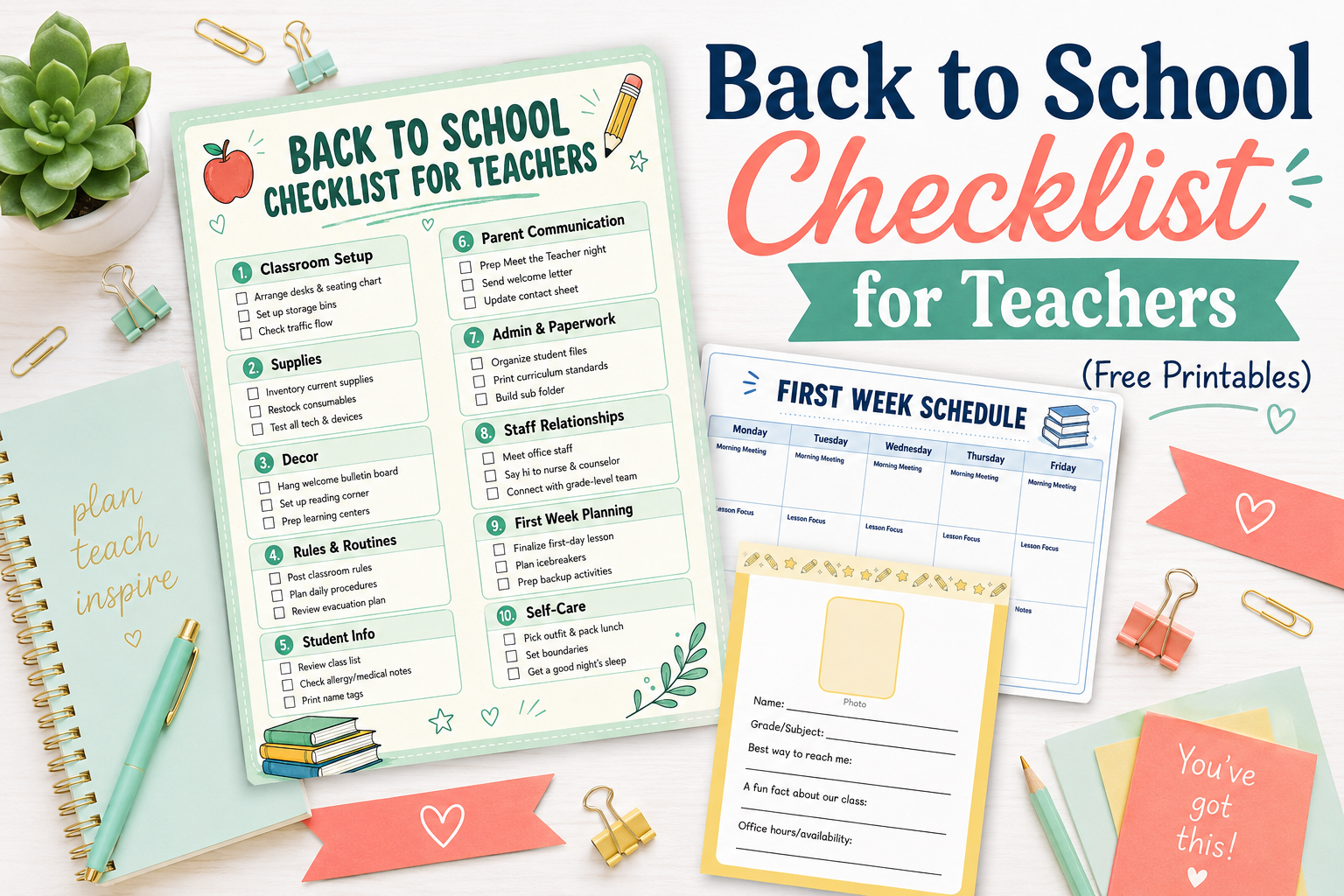
Grab the Free Back-to-School Printable Checklist for Teachers
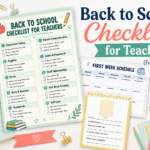
Reading through ten categories is one thing. Actually checking boxes off while you’re elbow-deep in bulletin board paper is another, which is why this whole list also comes as a printable.
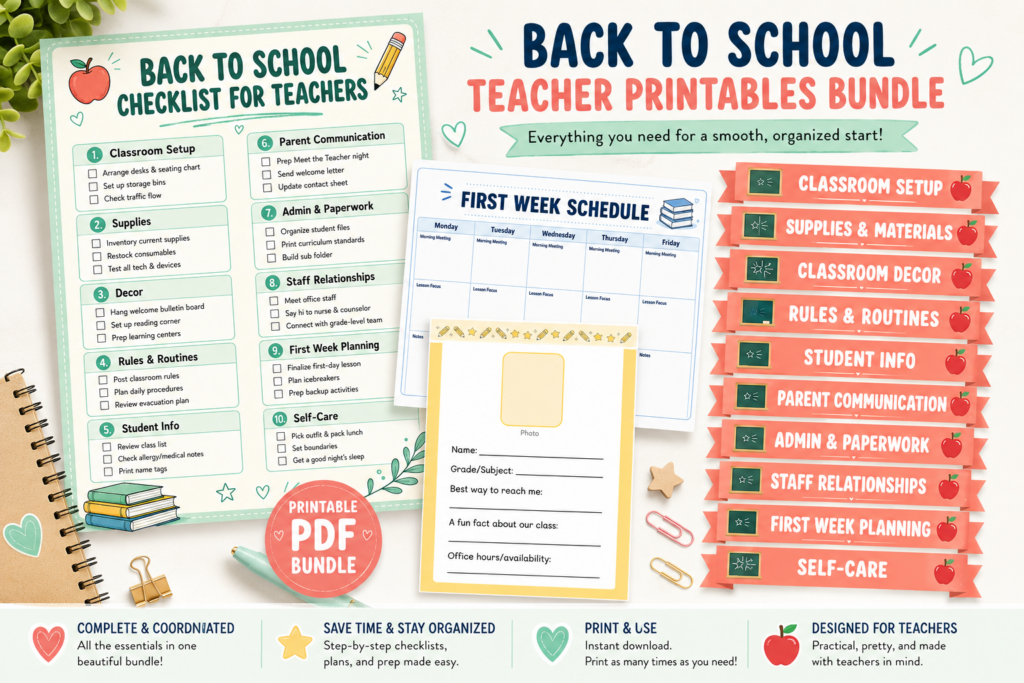
It’s the same ten categories, classroom setup through self-care, condensed down onto one printable checklist page you can print, clip to a binder, or stick on the fridge until August stops being a threat and starts being a date on the calendar.
Two bonus printables come along with it: a Meet the Teacher card for open house, and a First Week schedule template to help map out day one through day five.
Pop your email in below and it’ll land in your inbox, ready to print tonight if you’re the type to get ahead of things, or next week if you’re not, no judgment either way.
Frequently Asked Questions
What should be on a teacher’s back to school checklist?
The essentials boil down to five things: classroom setup, supplies, rules and routines, parent communication, and a sub folder. Everything else on this list, decor, self-care, staff relationships, matters too, but those five will actually stop your first week from falling apart.
How early should teachers start preparing for back to school?
Two to three weeks out is realistic for most of this list. Classroom setup and shopping can happen earlier if your building’s open, but paperwork and lesson planning tend to go stale if you start too far ahead.
What’s the difference between a new teacher checklist and a veteran teacher checklist?
New teachers usually need more time on setup and procedures, since none of it exists yet. Veteran teachers can mostly skim those sections and spend their energy on self-care and staff relationships instead, the parts that actually shift year to year.
Take It One Category at a Time
Ten categories, from classroom setup all the way to self-care, is a lot to hold at once, so don’t try to. Work through it in whatever order your week actually allows, and let the rest wait its turn.
Pin this one so it’s easy to find again in a week when the list feels longer than it does today, and grab the free printable if you haven’t already, it’s built for exactly this kind of skimming under pressure.
And once the planning side is handled, pair this with our 18 Back to School Chart Ideas post for the execution part, since a checklist tells you what needs doing, and the charts are what actually gets it done on the wall.